

Offshore Action: Landing Powerful Yellowtail Near the Rocks
Updated: Feb 20
artificial lures, beginner fishing gear, casual angling, casual fishing, coastal fishing, expert fishing, family fishing, fishing accessories, fishing adventure, fishing advice, fishing blog, fishing charters, fishing community, fishing experience, fishing for beginners, fishing gear reviews, fishing guide, fishing hooks, fishing industry, fishing knots, fishing lifestyle, fishing reel, fishing reviews, fishing rod, fishing safety, fishing spots, fishing stories, fishing techniques, fishing tips, fishing trips, fishing tutorial, fly fishing, freshwater fishing, how to fish, lake fishing, live bait, monofilament line, outdoor adventure, pond fishing, recreational fishing, river fishing, saltwater fishing, spinning combo, sustainable fishing, tackle box ess
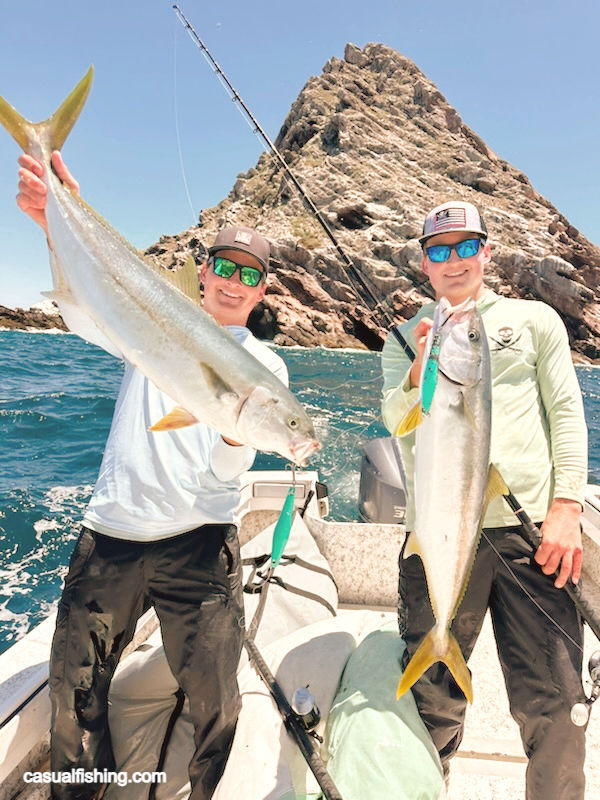
There’s something different about offshore fishing when you’re working tight to structure. The photo above captures exactly that moment — two anglers standing on a center-console boat, deep blue water behind them, and a dramatic rocky outcrop rising straight from the sea. This is classic yellowtail country.
The Catch: Yellowtail (Amberjack Family)
The fish in the photo are yellowtail, commonly referred to as California yellowtail (Seriola lalandi), a member of the jack (Carangidae) family. Based on the visible characteristics:
Streamlined, torpedo-shaped body built for speed
Distinct yellow tail and fin accents
Silvery-blue upper body fading to a lighter belly
Average size here appears to be in the 15–25 lb class, strong, mature fish
These are not reef dwellers — they are aggressive pelagic predators that patrol drop-offs, offshore pinnacles, kelp lines, and rocky structure like the one visible behind them.
Why This Location Matters
The prominent rocky formation in the background is more than scenery — it’s structure. Structure creates:
Upwellings and current breaks
Baitfish aggregation
Ambush zones for predators
Yellowtail are highly structure oriented. When current pushes bait against rock formations or underwater ridges, these fish move in to feed aggressively.
The presence of vertical jigging rods and metal jigs in the photo suggests they were likely targeting fish holding deeper in the water column, then working the lure upward through active feeding zones.
Tackle & Technique Observed
From the image:
Metal jigs (likely 100–200g class)
Medium-heavy spinning setups
Offshore center-console platform
This indicates either:
Vertical speed jigging
Yo-yo iron technique
Or fast retrieve surface iron presentation
Yellowtail are reaction strikers. The erratic flash of a metal jig mimics wounded baitfish and triggers aggressive strikes.
Fight Characteristics of Yellowtail
Yellowtail are known for:
Powerful initial runs
Hard, sustained pulls
Deep dives toward structure
Shoulder-driven torque
They test drag systems and angler endurance. On lighter setups, these fish can easily spool you if you’re not ready.
Seasonal Behavior
Depending on region (Southern California, Baja, Pacific offshore zones), yellowtail often:
Move closer to structure during warmer water periods
School heavily when bait is thick
Feed more aggressively during current shifts and tide changes
The clear blue water in the photo suggests stable offshore conditions — ideal for pelagic activity.
Why Yellowtail Are a Casual Fishing Favorite
They combine sport and reward:
Excellent fight and stamina
Great table fare
Photogenic trophies that make for memorable trip photos
Final Takeaway
This image tells a complete story:
Targeting structure
Using active jigging techniques
Hooking into powerful pelagics
Landing quality yellowtail in clean offshore conditions
It’s not just about the catch — it’s about understanding how habitat, technique, and timing come together offshore.
If this is your kind of fishing, you’re in the right place.


Comments